
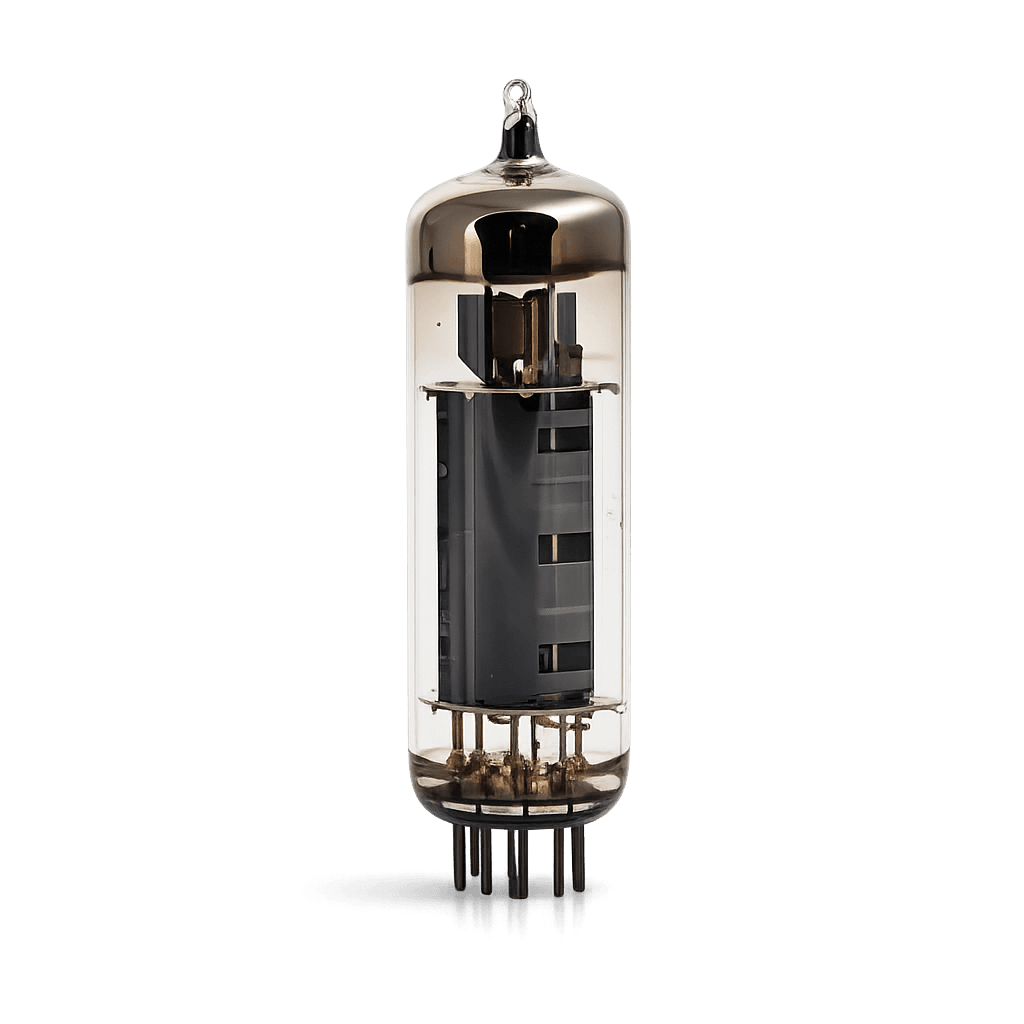
How Long Do Vacuum Tubes Last? Signs It’s Time for a Replacement
Tube service life varies with type, circuit and use. Learn which symptoms warrant testing and why amplifier faults can mimic a worn tube.
Glass Audio Team7 October 2026
Bias describes the operating conditions that set a power tube’s quiescent current. Correct adjustment matters for performance and tube life, but the correct method and target depend on the amplifier design and tube type.
In a fixed-bias design, a negative grid supply is used to set operating current, sometimes through a user-adjustable control. In a cathode-biased design, a cathode resistor develops a voltage that helps set the operating point. These labels do not mean that a tube change can be made without checking the amplifier maker’s instructions.
Follow the amplifier manual or service documentation for the exact tube type, whether the tubes must be matched, and whether bias should be measured or adjusted after replacement. Tube variation, amplifier condition and design can affect the operating point. Do not assume that a tube with the same number is safe in every circuit.
Bias adjustment may involve dangerous voltages inside the amplifier, including after it has been switched off and unplugged. Do not remove the chassis, probe live circuits or adjust bias unless qualified and equipped to work safely. If the procedure or target value is unclear, have a qualified amplifier technician do the check.
Not sure which type your amplifier requires? Check the equipment documentation or ask a qualified technician before ordering replacement power tubes.
Tube service life varies with type, circuit and use. Learn which symptoms warrant testing and why amplifier faults can mimic a worn tube.
Ringing or feedback can have several causes. Learn what microphonics means and how to pursue a safe diagnosis without tapping a powered tube.
Compare EL34, 6L6 and KT88 power tubes by construction and electrical requirements, and learn why amplifier compatibility and bias matter before replacement.