
How Long Do Vacuum Tubes Last? Signs It’s Time for a Replacement
Tube service life varies with type, circuit and use. Learn which symptoms warrant testing and why amplifier faults can mimic a worn tube.
Glass Audio Team7 October 2026
Microphonics describes mechanical vibration inside a tube that becomes audible in an amplifier. Ringing, squeal or feedback can also come from sockets, wiring, speakers, gain settings or other circuit faults, so the sound alone does not prove that a tube is defective.
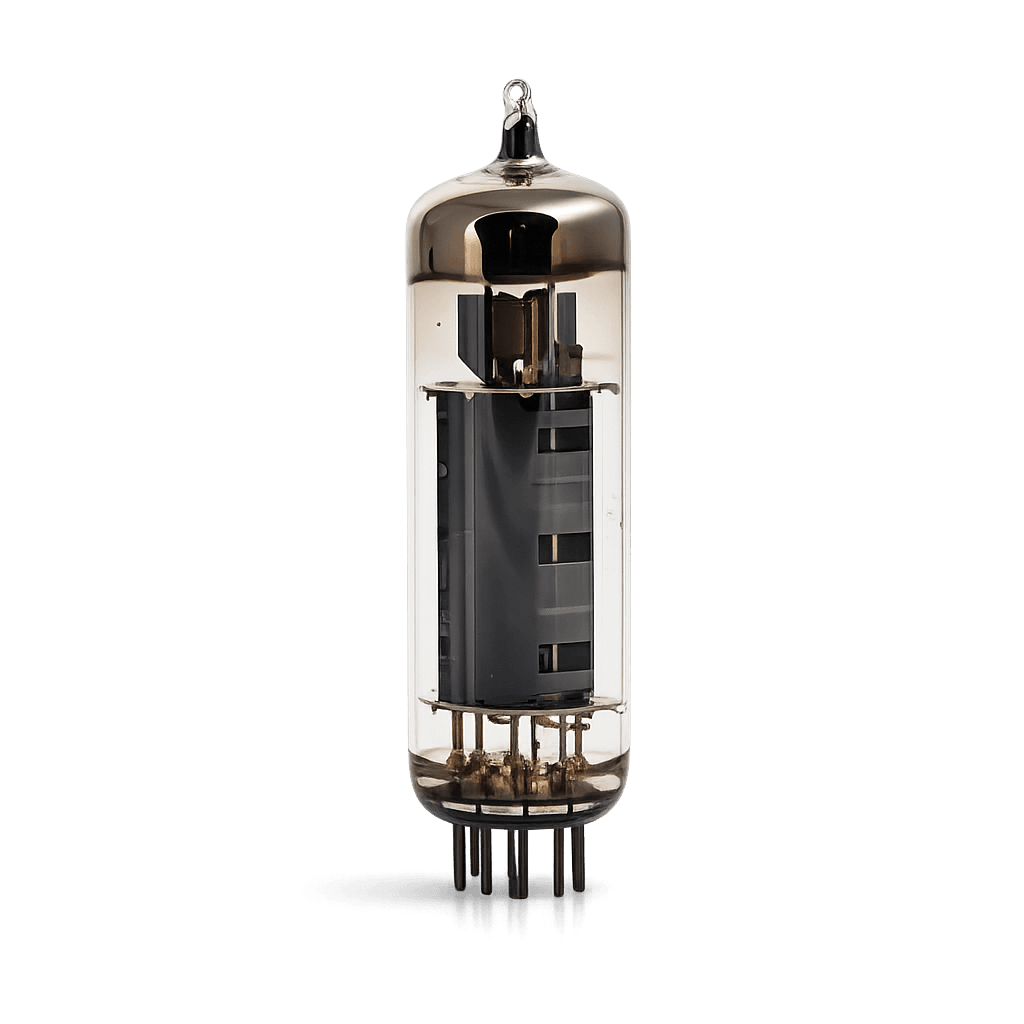
Tube electrodes and supports can vibrate. When those vibrations affect the signal, the amplifier may reproduce a ringing or feedback sound. The effect can be more noticeable in sensitive preamplifier stages, where a small signal disturbance is amplified downstream.
A tapping test with an amplifier powered on is sometimes used by technicians, but it is not a safe general-purpose test for untrained users. Tubes become hot, and an open amplifier can expose dangerous voltages. Do not tap a tube, open the chassis, or touch internal parts if you are not qualified to work safely around live equipment. Have a qualified technician test the amplifier and distinguish tube noise from other faults.
Follow the amplifier manual and use the exact specified type. Switch the amplifier off, disconnect it from power, allow it to cool, and only handle an accessible tube if the manufacturer’s instructions permit it. Do not remove covers or reach inside the chassis. Power-tube changes may also require a bias check or adjustment by a technician.
If you are unsure which tube type is correct, check the equipment documentation or ask a qualified technician before ordering a replacement.
Tube service life varies with type, circuit and use. Learn which symptoms warrant testing and why amplifier faults can mimic a worn tube.
Learn what power-tube bias does, how fixed-bias and cathode-bias designs differ, and why adjustment should follow the amplifier maker’s instructions.